.png)
MAKE THE CHANGE
Instead of:
Cost per hire as the only financial conversation.
Ask:
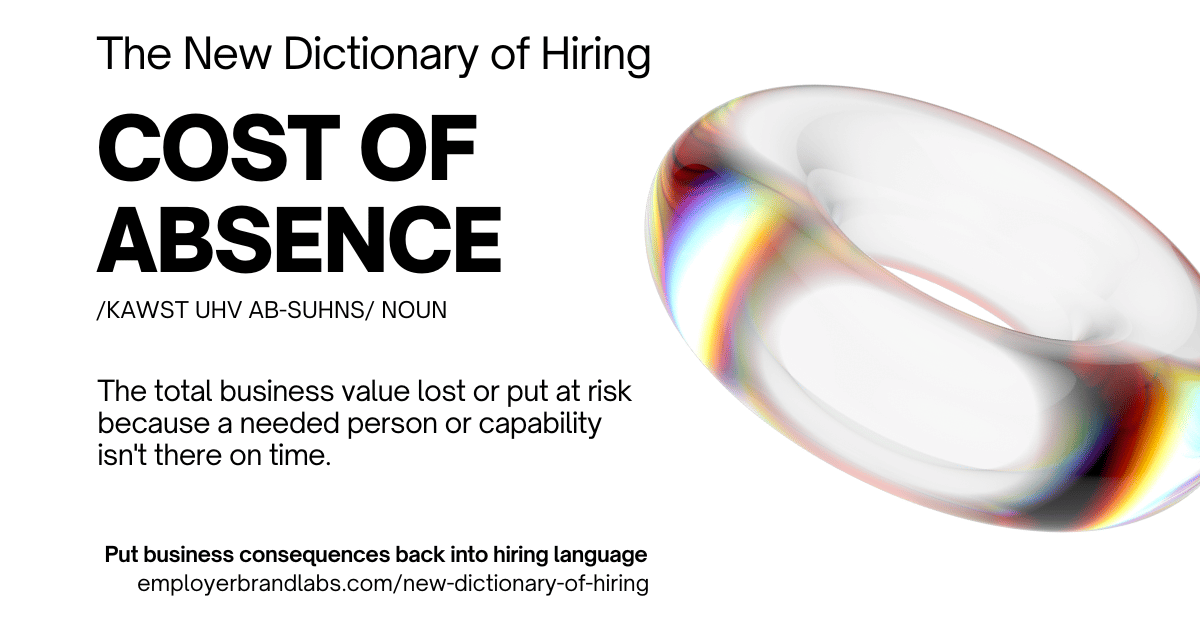
What does another month without this person cost us?
EXAMPLE
A role costs $15,000 more to fill than budgeted. Leaving it open another quarter may delay $200,000 worth of work and force the team to buy temporary support.
HOW TO USE IT
Before debating the price of a difficult hire, estimate what the business loses or puts at risk while the capability is missing. Use a reasonable range, show your assumptions and compare the cost of waiting with the cost of acting.
SAY IT TO LEADERSHIP
We're spending a lot of time debating what this person will cost. What will another 90 days without them cost? I'd like that number on the table before we decide.
NOT TO BE CONFUSED WITH
Absence Burn: Cost of Absence is the total loss; Absence Burn is the same loss as a rate, per week or month. Opportunity Leakage is business never pursued at all, rather than lost while waiting for a specific hire.