.png)
MAKE THE CHANGE
Instead of:
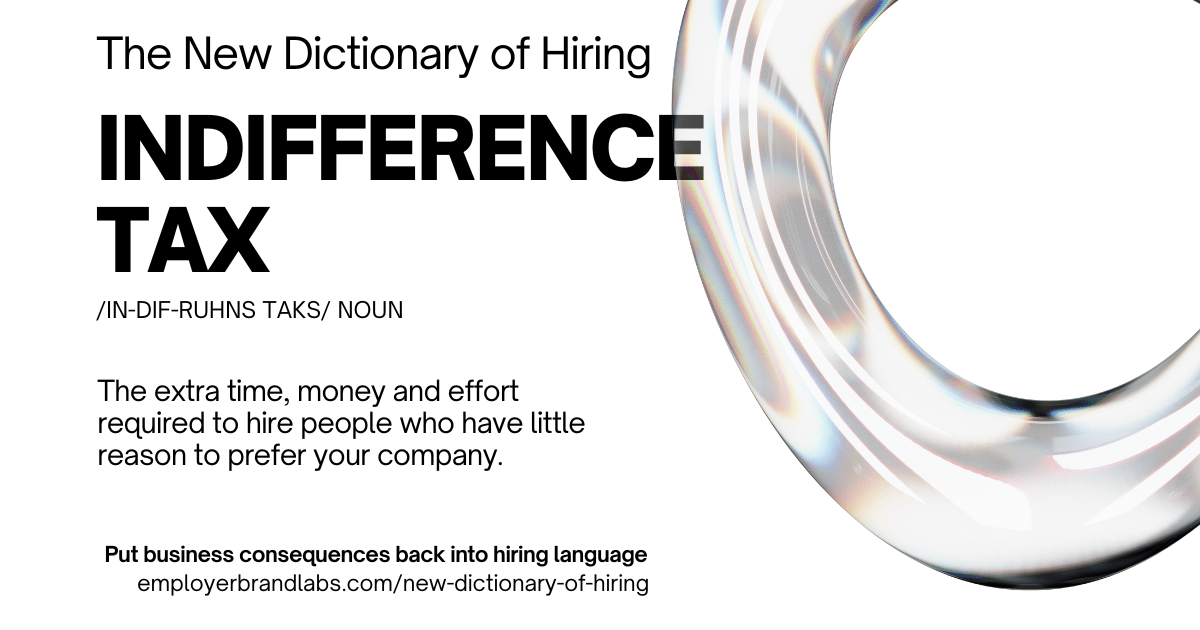
Assuming weak employer preference has no financial consequence.
Ask:
How much recruiting spend exists because we haven't created preference in advance?
EXAMPLE
A team spends heavily on ads, agencies and repeated outreach just to get qualified people to take a first conversation. Candidates who already know and prefer another employer answer them immediately.
HOW TO USE IT
Track the extra sourcing effort, advertising and agency dependence required in markets where people have no reason to choose you. Use those costs to make the case for building preference before the search.
SAY IT TO LEADERSHIP
We're paying more every time we hire because too many of the people we need are indifferent to us. That's a cost we can reduce, but it won't be fixed with another job ad.
NOT TO BE CONFUSED WITH
Sameness Tax: the Sameness Tax is one cause of the Indifference Tax. When candidates can't tell employers apart, they decide on pay and convenience. The Indifference Tax is the total extra cost of not being preferred.