.png)
MAKE THE CHANGE
Instead of:
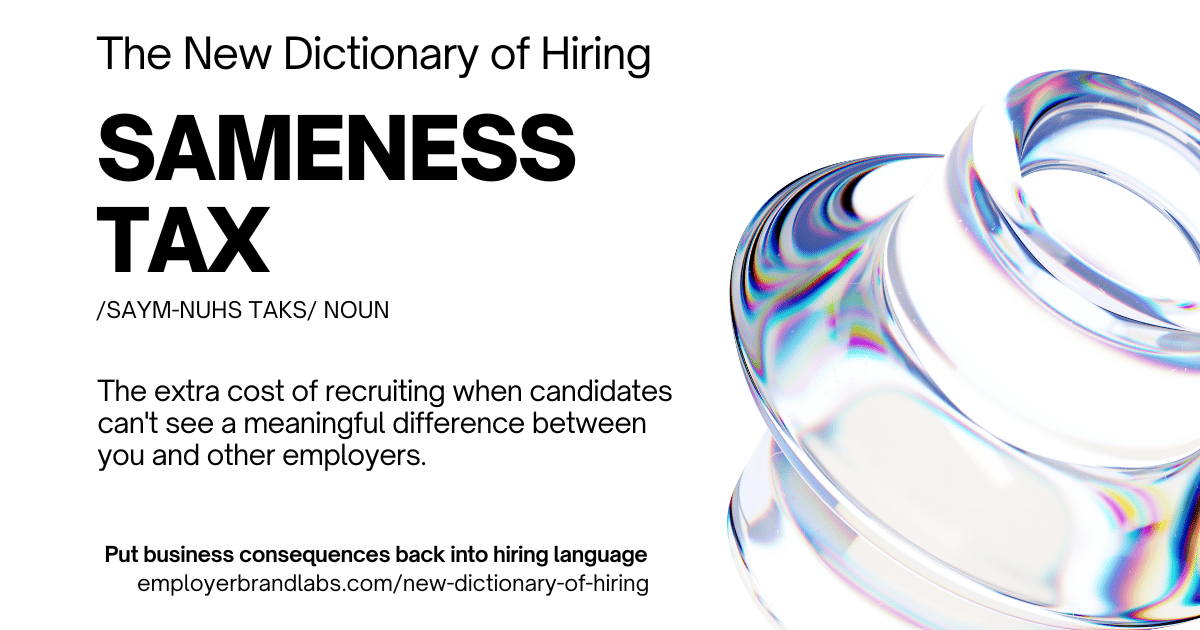
Treating generic employer messaging as merely boring.
Ask:
What are we paying because candidates can't see a meaningful difference?
EXAMPLE
Five competitors promise growth, impact and a great culture. A candidate sees no meaningful difference, so they compare salaries and commute times. The employer has helped turn its own job into a commodity.
HOW TO USE IT
Put your messaging beside the employers that compete for the same people. If the claims are interchangeable, find specific, believable differences that matter to the talent you need.
SAY IT TO LEADERSHIP
When candidates can't tell our opportunity apart, they choose on the things they can compare. Most of those things cost us money. We should stop making price our only argument.
NOT TO BE CONFUSED WITH
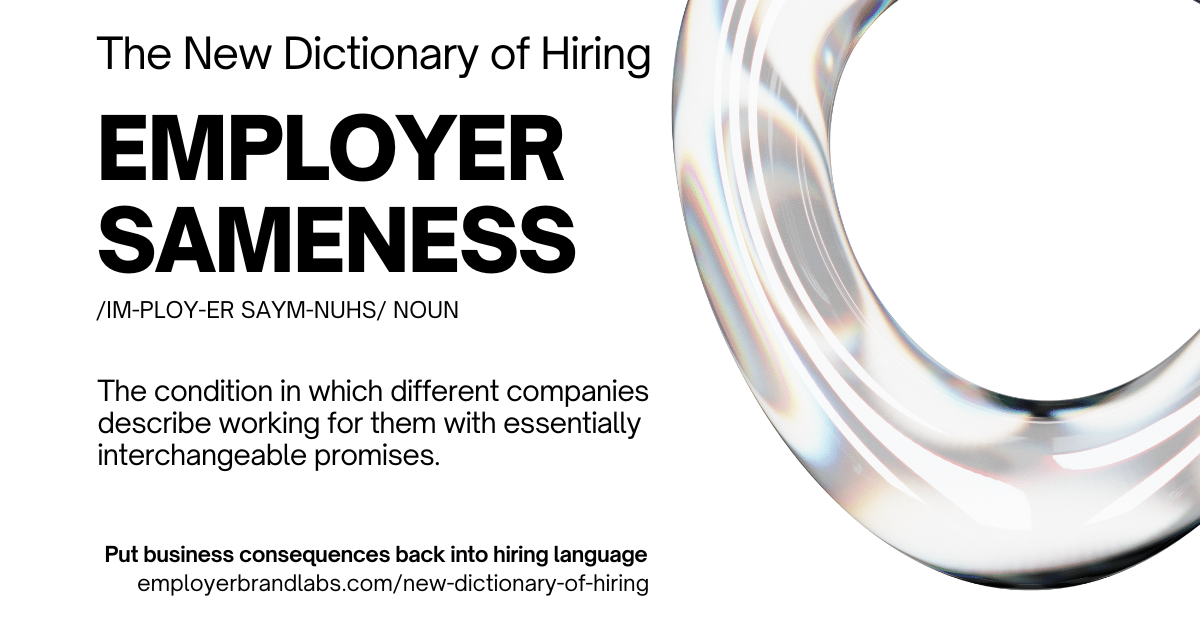
Employer Sameness: Employer Sameness is the condition; the Sameness Tax is what it costs. The Indifference Tax is broader: the total cost of not being preferred, for any reason.